Most households review their money in one of two ways: never, or in a panic. Neither tells you much.
There's a calmer middle option. In the first week of a new month, sit down for twenty minutes, ideally together, and look back at the one that just ended. Not at every transaction. Just at the plan against what actually happened.
Done every month, it's the single habit that turns a budget from a hopeful document into an accurate one. It also tends to prevent the argument where one of you asks "where did it all go?" and nobody has an answer.
The three questions
A good recap answers three things, in this order:
- Did everything get paid?
- What came out different from the plan, and is that the new normal?
- Where did the month actually go?
That's it. Resist the urge to audit every coffee. The point is to fix the plan, not to relitigate the month.
Question 1: did everything get paid?
Start with the bills that never got ticked off. There are only three possible reasons:
- It was paid, and nobody ticked it. Tick it now, with the real amount if you know it.
- It wasn't due this month. A quarterly bill, or one that changed its date. Fix the bill's schedule so it stops appearing where it doesn't belong.
- It genuinely wasn't paid. This is the one that matters. Pay it, and work out why it slipped: no reminder, wrong date, not on autopay when you thought it was.
A bill that slips once is an accident. A bill that slips twice needs a reminder or autopay.
Question 2: what came out different?
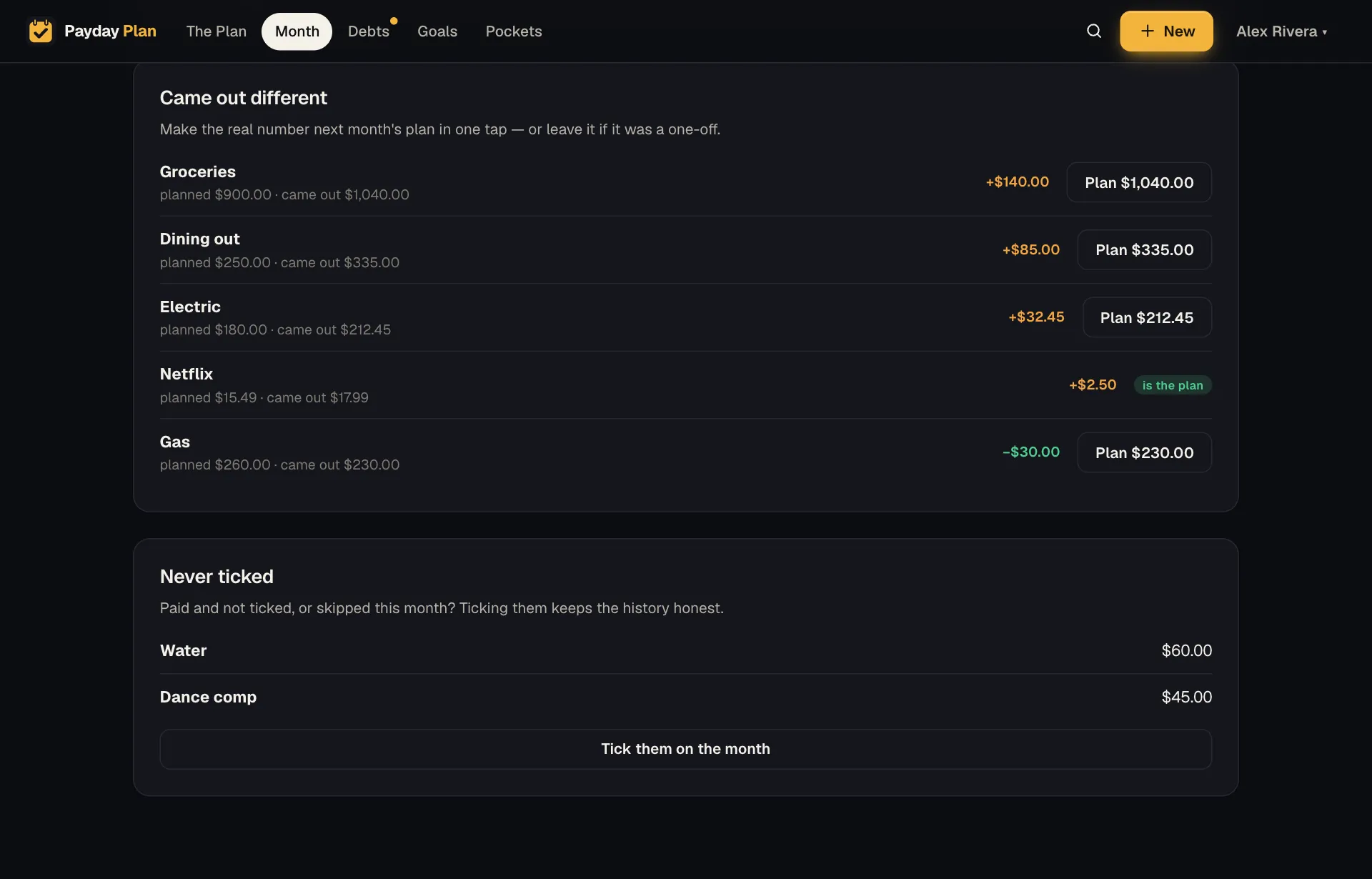
Next, the bills where the real amount wasn't the planned amount. For each, decide which kind of difference it is:
- A one-off. The water bill spiked because of a leak you've fixed. Leave the plan alone.
- A seasonal swing. Electric in July, heat in January. Leave the plan alone, but consider planning to the yearly average rather than the mild months.
- A new normal. The streaming service raised its price, the insurance renewed higher, the kids eat more. Change the plan.
That last category is where most budgets quietly go wrong. Prices go up a few dollars at a time, and if you never update the plan, every month comes up a little short for reasons nobody can name.
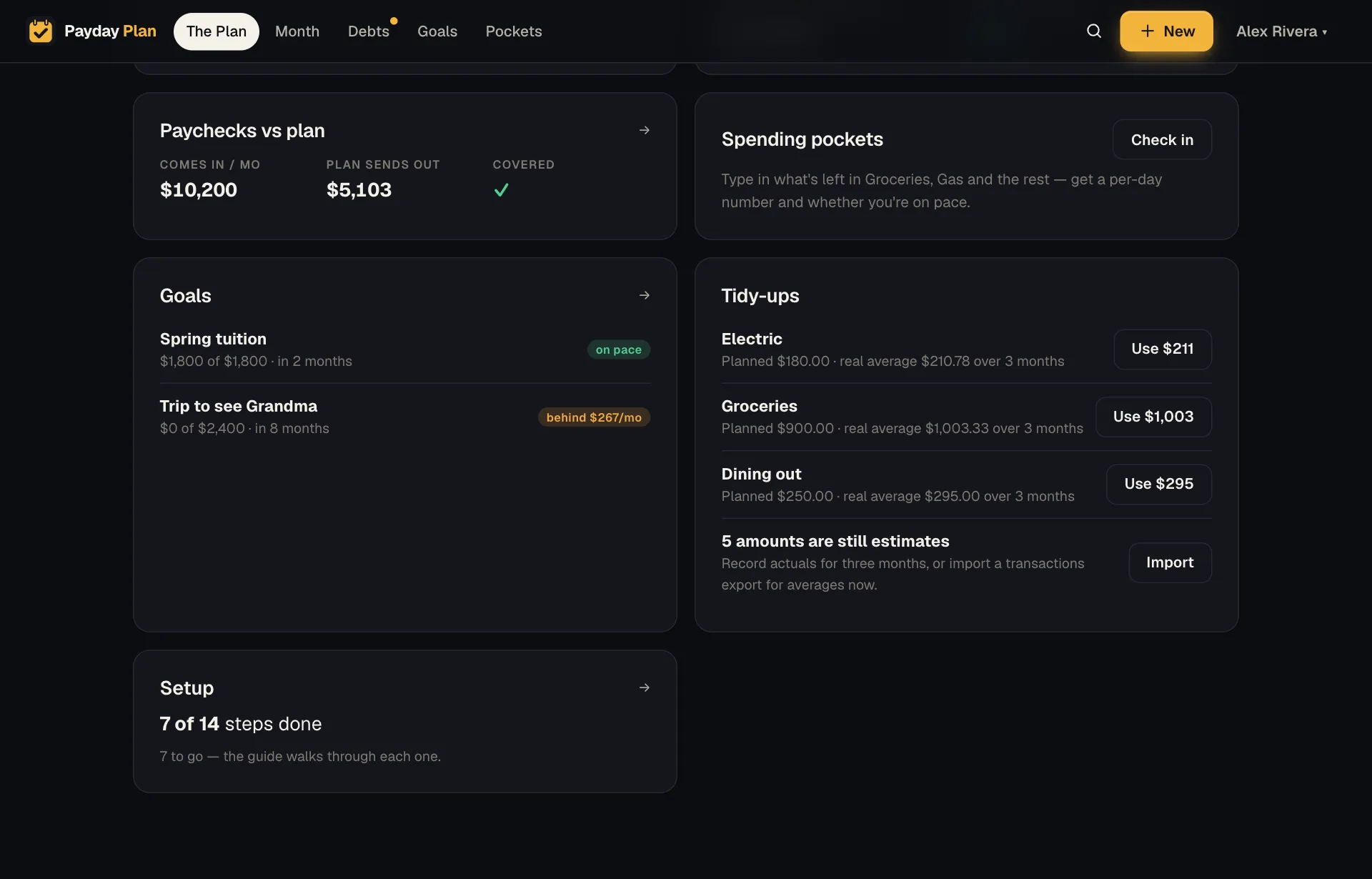
Note: if a bill is an estimate (groceries, utilities, gas), don't chase it every month. Wait for three months of real numbers and plan to their average. One month is noise; three is a pattern.
Question 3: where did the month actually go?
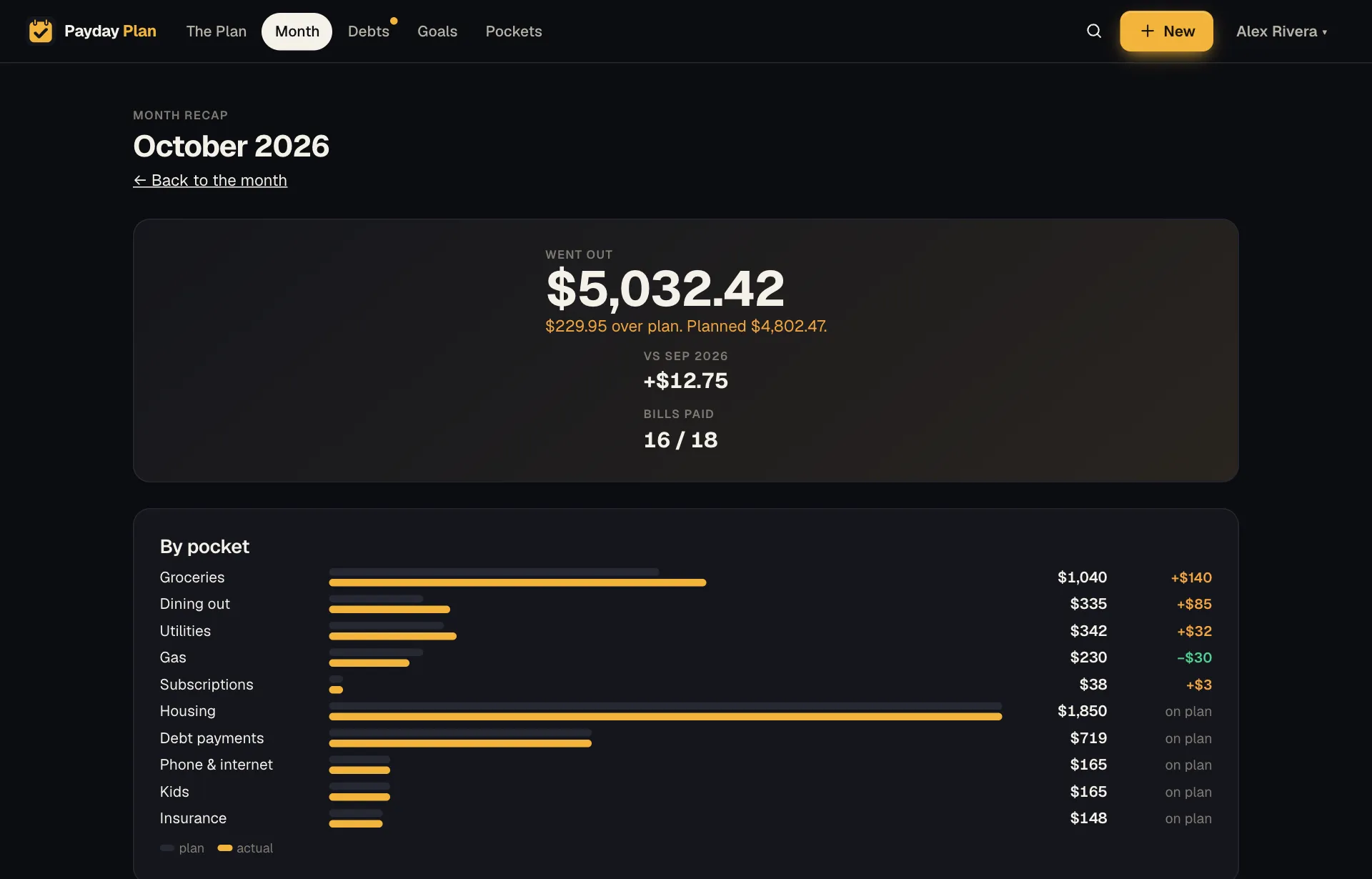
Last, step back and look at the month by category, or by pocket if you use them: housing, utilities, food, transportation, the fun stuff. Compare planned against actual for each.
You're looking for one thing: the category that's consistently over. It's rarely the one you'd guess. Households often brace for groceries and discover it's the "little things" pocket, or subscriptions, or the car.
Pick one category to watch next month. Only one. A recap that produces ten resolutions produces none.
A worked example
A made-up household closes October with this:
| Planned | Actual | Difference | |
|---|---|---|---|
| Housing | $1,850 | $1,850 | $0 |
| Utilities | $260 | $318 | +$58 |
| Food | $900 | $1,040 | +$140 |
| Subscriptions | $62 | $71 | +$9 |
| Car | $520 | $480 | −$40 |
Two bills were never ticked: the water bill (paid on autopay, nobody ticked it) and a $35 school fee (genuinely forgotten).
Their twenty minutes:
- Unticked: tick the water bill. Pay the school fee today, and add a reminder for next term.
- Utilities +$58: the electric bill was $212 against a $180 plan, and this is the third month in a row above $200. New normal. Plan $210.
- Subscriptions +$9: one service went up $9. New normal, or cancel it. They keep it and update the plan.
- Food +$140: two birthday dinners out. A one-off this time, but it's the third month over. Food is next month's one thing to watch.
- Car −$40: gas was cheaper. Leave it; it'll swing back.
Three plan changes, one bill paid, one category to watch. Twenty minutes.